.webp)

ERRC System INSTALLATION
Everything you need to know to ensure building compliance
Radio Frequency Testing
Emergency Responder Radio Communication Systems
Radio Frequency Testing
Emergency Responder Radio Communication Systems
Radio Frequency Testing
Emergency Responder Radio Communication Systems
Radio Frequency Testing
Emergency Responder Radio Communication Systems
Heads above the competition
Firstcomms just gets the job done. They're hands-on through the whole process – you can turn them loose and trust the job will get done right. I've recommended them to several other divisions because they're heads above the competition. Most cost-effective, timely delivery, first-rate service”
.webp)
Steve Price | Arco Murray

ERRC Regulations
What are the ERRC Requirements?
ERRC stands for Emergency Responder Radio Coverage. It's a radio signal amplification system that ensures first responders can communicate inside your building – through the thick walls of concrete, steel and low-E glass that block ordinary radio signals.

the Equipment
How an ERRC system works
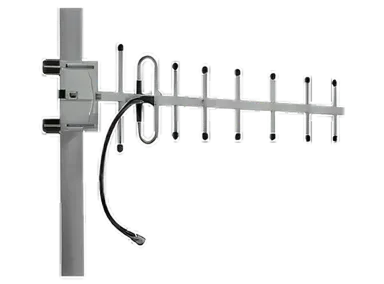
Rooftop Antenna
A rooftop antenna captures radio signals from outside the building
.webp)
Central BDA
A Bi-directional amplifier (BDA) conditions and amplifies the signals to required strength
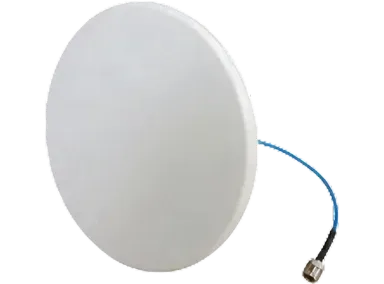
Distributed Antennas
In-building antennas distribute signals throughout the building
Building types we service
Most jurisdictions require ERRC installation in new construction and major renovation of:
High-rise buildings
Multifamily buildings
Hospitality venues
Schools and educational buildings
Hospitals and healthcare facilities
Storage facilities
Industrial buildings
What is the ERRC process?
How it works at Firstcomms
From testing and design to installation and permitting, our in-house team seamlessly handles every aspect. So you can focus freely on your build, confident you’ve left your project in expert, efficient hands.
.webp)
PHASE-01
Initial RF testing
We test the signal strength in your building using your local emergency departments’ actual frequencies. Our technicians take measurements on a grid pattern covering every floor, stairwell, and critical area.
1-2
Days spent testing
100s
20 Minimum test points per floor
100%
Coverage gaps identified
If your building passes:
We provide all your documentation for AHJ approval
If your building fails:
We offer a solution to ensure your ERRC compliance
.webp)
PHASE-02
System design and engineering
Created in-step with your team
Our professionals work with yours to ensure all drawings are done in coordination with your people.
Engineer-designed, architect-approved
Our in-house engineers create a custom RF design. Then our inhouse draftsmen draw up the detailed construction drawings.
.webp)
PHASE-03
Permitting, AHJ, and FCC licensee coordination
We take ALL compliance work off your plate:
Researching your AHJ’s specific permit requirements
Coordinating FCC retransmission agreement with the licensee holder
Liaising with your local fire official
Managing the approval process and ensuring it gets done correctly
PHASE-04
INSTALLATION
01
We visit your site to make sure our teams and yours are coordinated
02
The rough-in cabling infrastructure gets installed
03
The passive equipment, like splitters and antennas, are mounted
04
Donor antennas are installed and oriented for optimal signal capture
05
We set into place the system’s BDA and Backup Battery Unit
06
We conduct comprehensive testing to ensure the system is compliant
Our certified technicians follow the highest professional standards:
Aesthetically mindful equipment placement.
Clear cable labeling.
Secure equipment mounting.
Proper grounding and surge protection.
Well-organized equipment rooms,
PHASE-05
System design and engineering
We test, tune and verify the BDA system to endure it provides the required public-safety radio coverage. Then we prepare the test reports and documentation needed for seamless AHJ approval.
the Equipment
Equipment we use In your ERRC system
Bidirectional Amplifier (BDA)
The central piece that amplifies signals. Mounted in secure electrical room.
Donor Antennas
Mounted on rooftops or building exterior. Capture local transmitter signals.
Distribution Antennas
Strategically placed throughout your building. Ceiling or wall-mounted.
.webp)
Coax Cables
Professional-grade cables connecting all system parts. Placed to fit your existing cable system.
How long does the ERRC process take?
4-8weeks in all
Depending on building size and type, Frequency type and the permit processing time.
3-10 Days
Testing your site and installing your system
Our minimal-disruption promise:
We schedule our work around your timeline
We coordinate flexibly with other trades
We get most disruptive work done in 2-3 consecutive days
In occupied buildings, we work around operations at
off-peak hours
off-peak hours
ANUAL MAINTENANCE
Your yearly testing needs And our comprehensive ANNUAL maintenance package
Fire codes require your ERRC systems to be tested every twelve months, with reports submitted by code-specific deadlines. That’s why we offer our annual maintenance package.
Ongoing oversight and refurbishing
Regular inspections, remote monitoring for equipment failures
Annual testing and reporting
Complete documentation to maintain compliance
Compliance date tracking
Turnkey monitoring of your compliance deadlines
Prompt emergency repairs
Fast restoration to fix system failures and maintain compliance
Radio Frequency Testing
Emergency Responder Radio Communication Systems
Radio Frequency Testing
Emergency Responder Radio Communication Systems
Radio Frequency Testing
Emergency Responder Radio Communication Systems
Radio Frequency Testing
Emergency Responder Radio Communication Systems

Start your ERRC installation today
Call us